Hair Fall or Hair Thinning? Understanding the Difference
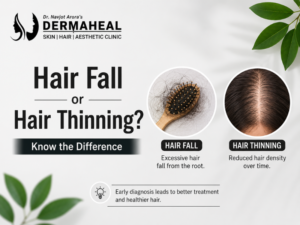
Many people use the terms hair fall and hair thinning as if they mean the same thing. However, they are different conditions and may have different causes. Knowing the difference is important because the right treatment depends on the actual problem.
Hair fall refers to losing more hair than usual, while hair thinning means your hair gradually becomes less dense over time. Both conditions can affect your confidence, but early diagnosis by a dermatologist can help you manage them effectively.
At Dermaheal Skin & Hair Clinic, our experienced dermatologists carefully evaluate your scalp and hair health to identify the underlying cause and recommend a personalized treatment plan.
What Is Hair Fall?
Hair fall happens when more hair strands shed than the normal daily cycle. Losing some hair every day is natural, but excessive hair shedding may indicate an underlying concern.
Common Signs of Hair Fall
- Hair strands on your pillow
- Excessive hair in the shower
- Hair collecting on your comb or brush
- Increased hair shedding while washing your hair
- Noticeable hair on your clothes
Hair fall may occur suddenly or gradually depending on the cause.
What Is Hair Thinning?
Hair thinning develops slowly over time. Instead of losing large amounts of hair every day, the hair becomes finer, weaker, and less dense.
Common Signs of Hair Thinning
- Reduced hair volume
- Wider hair parting
- More visible scalp
- Fine and weak hair strands
- Less fullness in the ponytail
Hair thinning usually becomes noticeable gradually, making early detection important.
Hair Fall vs Hair Thinning: What’s the Difference?
Although both conditions affect your hair, they are not the same.
| Hair Fall | Hair Thinning |
|---|---|
| Increased hair shedding | Reduced hair density |
| Often noticed suddenly | Develops gradually |
| Hair comes out easily | Hair becomes finer over time |
| May be temporary | May continue if left untreated |
| Can occur at any age | Often becomes more noticeable with age |
Understanding the difference helps your dermatologist choose the most suitable treatment approach.
What Causes Hair Fall?
Several factors can contribute to excessive hair fall.
Common causes include:
- Stress
- Poor nutrition
- Lack of sleep
- Illness
- Hormonal changes
- Seasonal changes
- Certain medications
- Scalp conditions
- Poor hair care habits
Identifying the root cause is the first step toward effective treatment.
What Causes Hair Thinning?
Hair thinning often develops due to long-term changes affecting hair growth.
Possible causes include:
- Family history
- Age-related changes
- Hormonal imbalance
- Poor scalp health
- Nutritional deficiencies
- Ongoing stress
- Certain medical conditions
A dermatologist can identify the reason through a detailed consultation and scalp evaluation.
Can Hair Fall Turn Into Hair Thinning?
Yes. If excessive hair fall continues for a long time without proper care, it may reduce overall hair density, making the hair appear thinner.
Early diagnosis can help manage the condition before noticeable thinning develops.
How Is the Right Diagnosis Made?
Since hair fall and hair thinning may look similar, professional evaluation is important.
A dermatologist may assess:
- Hair growth pattern
- Scalp condition
- Hair density
- Medical history
- Lifestyle habits
- Family history
This helps determine the actual cause and allows a personalized treatment plan to be created.
Treatment Options for Hair Fall and Hair Thinning
The best treatment depends on the underlying cause rather than the symptoms alone.
A dermatologist may recommend a personalized combination of treatments, scalp care, lifestyle changes, and medical management to improve hair health.
The treatment plan may focus on:
- Improving scalp health
- Supporting healthy hair growth
- Reducing excessive hair shedding
- Strengthening existing hair
- Maintaining long-term hair density
Early treatment generally provides better results than waiting until hair loss becomes more noticeable.
Daily Hair Care Tips for Healthier Hair
Simple daily habits can help support healthy hair.
Consider the following:
- Eat a balanced diet.
- Stay well hydrated.
- Get adequate sleep.
- Manage stress.
- Avoid excessive heat styling.
- Keep your scalp clean.
- Use hair care products suitable for your scalp.
- Avoid tight hairstyles.
- Follow your dermatologist’s advice.
Healthy habits work together with professional treatment to improve overall hair health.
When Should You Visit a Dermatologist?
Many people wait until significant hair loss occurs before seeking help. Early consultation often provides better treatment options.
You should consult a dermatologist if you notice:
- Excessive daily hair shedding
- Visible scalp
- Widening hair part
- Gradual loss of hair volume
- Sudden hair loss
- Hair becoming thinner over time
- Persistent scalp problems
- Family history of hair loss
Timely evaluation can help identify the cause and guide appropriate treatment.
Why Choose Dermaheal for Hair Care?
At Dermaheal Skin & Hair Clinic, we believe every patient deserves personalized care.
Our clinic offers:
- Experienced dermatologists
- Personalized hair and scalp evaluation
- Advanced diagnostic approach
- Customized treatment plans
- Comprehensive hair care solutions
- Patient-focused consultations
Our goal is to help patients improve scalp health, support healthy hair growth, and maintain long-term hair wellness.
Conclusion
Hair fall and hair thinning are different conditions, even though they may appear similar. Understanding the difference is essential for choosing the right treatment.
Ignoring early signs may allow the condition to progress over time. Consulting an experienced dermatologist can help identify the underlying cause and create a treatment plan that suits your individual needs.
Healthy hair begins with the right diagnosis and professional care.
Book Your Consultation at Dermaheal
If you are experiencing hair fall, hair thinning, or changes in your hair density, don’t ignore the signs.
Book a consultation with the experienced dermatologists at Dermaheal Skin & Hair Clinic, Dwarka. Our team will carefully assess your hair and scalp health and recommend a personalized treatment plan to help you achieve healthier, stronger-looking hair.
Take the first step toward healthier hair with expert dermatology care. https://www.dermaheal.co.in/
Frequently Asked Questions (FAQs)
1. Is hair fall the same as hair thinning?
No. Hair fall means excessive shedding of hair, while hair thinning refers to a gradual reduction in hair density.
2. Can hair thinning be treated?
Many cases of hair thinning can be managed with early diagnosis and personalized treatment recommended by a dermatologist.
3. What causes sudden hair fall?
Stress, illness, nutritional deficiencies, hormonal changes, seasonal factors, and scalp conditions can contribute to sudden hair fall.
4. How do I know if my hair is thinning?
Signs include reduced hair volume, a wider hair part, and increased visibility of the scalp.
5. When should I consult a dermatologist for hair concerns?
If you notice excessive shedding, thinning hair, visible scalp, or persistent hair loss, it is advisable to seek professional evaluation.
6. Can lifestyle affect hair health?
Yes. Diet, sleep, stress management, hydration, and proper scalp care all play an important role in maintaining healthy hair.
7. Does early treatment make a difference?
Yes. Early diagnosis and timely treatment often help manage hair concerns more effectively.
8. Why choose Dermaheal for hair care?
Dermaheal provides personalized consultations, experienced dermatologists, customized treatment plans, and comprehensive care for various hair and scalp concerns.