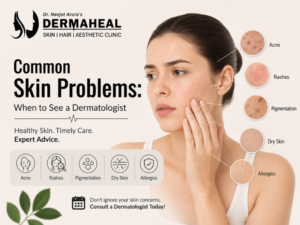
Common Skin Problems Dermatologists Treat and When You Should Seek Help
Your skin is the largest organ of your body and plays an important role in protecting you from the outside environment. However, pollution, weather changes, stress, unhealthy lifestyle habits, and ageing can affect your skin in many ways. While some skin concerns improve with proper skincare, others require professional care from a dermatologist.
Ignoring skin problems may allow them to become more noticeable over time. Early diagnosis and timely treatment can help improve skin health and prevent complications.
At Dermaheal Skin & Hair Clinic, our experienced dermatologists provide personalized care for a wide range of skin concerns. Whether you are dealing with acne, pigmentation, skin allergies, or other skin conditions, our team focuses on understanding the root cause and recommending the most suitable treatment plan.
Why Is It Important to Visit a Dermatologist?
Many people try home remedies or over-the-counter products before consulting a skin specialist. While basic skincare is important, not every skin concern can be managed without professional guidance.
A dermatologist can:
- Identify the actual cause of the skin problem.
- Recommend personalized treatment.
- Prevent skin concerns from becoming worse.
- Help improve skin health safely.
- Guide you on long-term skincare.
Seeking expert advice early often leads to better results.
Common Skin Problems Dermatologists Treat
1. Acne
Acne is one of the most common skin concerns affecting teenagers and adults. It may appear as pimples, blackheads, whiteheads, or painful bumps on the face, chest, back, or shoulders.
Common causes include:
- Excess oil production
- Hormonal changes
- Stress
- Blocked pores
- Family history
Early treatment can help reduce breakouts and lower the chance of acne marks.
2. Pigmentation
Pigmentation refers to uneven or darker areas of the skin that may develop due to sunlight, hormonal changes, ageing, or previous skin inflammation.
Common concerns include:
- Uneven skin tone
- Dark spots
- Patchy skin colour
- Sun-related pigmentation
A dermatologist can recommend suitable treatment after evaluating your skin.
3. Skin Allergies
Skin allergies may develop suddenly or continue for a long time. They often cause discomfort and irritation.
Common symptoms include:
- Itching
- Redness
- Rashes
- Swelling
- Skin irritation
Identifying the cause is important for proper management.
4. Dry and Sensitive Skin
Some people naturally have sensitive skin, while others develop it because of weather, skincare products, or lifestyle habits.
Signs include:
- Dryness
- Tightness
- Flaking
- Redness
- Burning sensation
A dermatologist can recommend a skincare routine suitable for sensitive skin.
5. Eczema
Eczema is a long-term skin condition that may cause itching, dryness, redness, and irritation. Flare-ups can happen from time to time and may be triggered by environmental or lifestyle factors.
Proper skincare and dermatologist-guided treatment can help manage symptoms.
6. Psoriasis
Psoriasis is another common skin condition that may lead to thick, dry, and scaly patches on different parts of the body.
Early diagnosis helps manage symptoms more effectively and supports long-term skin health.
7. Skin Infections
Different types of skin infections can affect people of all ages.
Possible signs include:
- Redness
- Swelling
- Pain
- Skin irritation
- Changes in the affected area
If symptoms continue or become worse, professional evaluation is recommended.
8. Hair and Scalp Problems
Dermatologists also treat many hair and scalp concerns.
Common concerns include:
- Hair fall
- Hair thinning
- Dandruff
- Itchy scalp
- Scalp irritation
Healthy hair begins with a healthy scalp, making early diagnosis important.
9. Nail Problems
Changes in your nails may sometimes indicate underlying skin or health concerns.
Common signs include:
- Thick nails
- Brittle nails
- Nail discoloration
- Slow nail growth
A dermatologist can evaluate nail changes and recommend suitable care.
Warning Signs You Should Not Ignore
Consider visiting a dermatologist if you notice:
- Acne that does not improve
- Persistent itching
- Skin rashes
- New or changing moles
- Dark patches
- Continuous hair fall
- Skin allergies
- Dry skin that remains irritated
- Skin growths
- Changes in your nails
Early medical advice often helps prevent the condition from becoming more serious.
How Dermatologists Diagnose Skin Problems
Every person’s skin is unique. Instead of treating only visible symptoms, dermatologists carefully assess your skin before recommending treatment.
The evaluation may include:
- Medical history
- Skin examination
- Lifestyle discussion
- Previous skin concerns
- Hair and scalp assessment, if needed
This helps create a personalized treatment plan based on your individual skin needs.
Healthy Habits for Better Skin
Simple lifestyle changes can help maintain healthier skin.
Try to:
- Cleanse your skin gently.
- Wear sunscreen daily.
- Drink enough water.
- Eat a balanced diet.
- Get adequate sleep.
- Manage stress.
- Avoid picking pimples.
- Follow a regular skincare routine.
- Visit your dermatologist for persistent concerns.
Healthy habits support both skin health and treatment outcomes.
Why Choose Dermaheal?
Dermaheal Skin & Hair Clinic provides comprehensive dermatology care for patients with different skin and hair concerns.
Why patients trust Dermaheal:
- Experienced dermatologists
- Personalized consultations
- Individual treatment plans
- Advanced skin care solutions
- Comprehensive skin and hair care
- Patient-focused approach
- Comfortable consultation experience
Our goal is to help every patient achieve healthier skin through safe, personalized, and evidence-based dermatology care.
Conclusion
Skin problems are common, but they should never be ignored. Early consultation with a dermatologist can help identify the underlying cause, provide the right treatment, and support long-term skin health.
Whether you are dealing with acne, pigmentation, skin allergies, eczema, or other skin concerns, seeking professional guidance can make a significant difference.
Healthy skin begins with the right diagnosis and expert care.
Frequently Asked Questions (FAQs)
1. What skin problems do dermatologists commonly treat?
Dermatologists commonly treat acne, pigmentation, skin allergies, eczema, psoriasis, hair fall, scalp concerns, nail problems, and other skin conditions.
2. When should I visit a dermatologist?
You should consult a dermatologist if you have persistent acne, itching, rashes, pigmentation, unusual skin changes, or hair and scalp concerns.
3. Can a dermatologist help with sensitive skin?
Yes. A dermatologist can identify the cause of sensitive skin and recommend a skincare routine suitable for your skin type.
4. Is pigmentation treatable?
Many forms of pigmentation can be managed with a personalized treatment plan recommended by a dermatologist.
5. Why is early diagnosis important?
Early diagnosis helps manage skin concerns more effectively and may reduce the risk of long-term skin damage.
6. Can dermatologists treat hair and scalp problems?
Yes. Dermatologists diagnose and manage hair fall, hair thinning, dandruff, scalp irritation, and other hair-related concerns.
7. How do I keep my skin healthy?
A healthy skincare routine, daily sunscreen use, hydration, balanced nutrition, good sleep, and regular dermatologist consultations help maintain healthy skin.
8. Why choose Dermaheal for skin care?
Dermaheal offers experienced dermatologists, personalized consultations, customized treatment plans, and comprehensive skin and hair care for patients of all ages.
Learn More About Dermaheal
If you’re looking for expert care for acne, pigmentation, skin allergies, eczema, psoriasis, hair fall, or other skin concerns, the experienced dermatologists at Dermaheal Skin & Hair Clinic, Dwarka are here to help. Our team provides personalized consultations and treatment plans designed around your skin and hair needs.
Explore more:
- Official Website: https://www.dermaheal.co.in/
- Meet Our Dermatologists: https://www.dermaheal.co.in/Doctors.html
- Follow us on Instagram for skin care tips, treatment updates, and patient education: https://www.instagram.com/dermaheal_india/