Have you noticed that your hair feels thinner than before, even though you don’t see excessive hair fall? Many people assume that hair thinning only happens when large amounts of hair fall out, but that’s not always true.
Hair can gradually become thinner due to changes in the hair growth cycle, shrinking hair follicles, nutritional deficiencies, hormonal changes, stress, genetics, or certain medical conditions. Since the change is often slow and progressive, many people don’t realize it until their scalp becomes more visible or their ponytail feels less dense.
The good news is that early diagnosis can often help slow or even reverse hair thinning with the right treatment.
At Dermaheal Skin & Hair Clinic, Dwarka, our experienced dermatologists evaluate the underlying cause of hair thinning and recommend personalized treatment plans to help restore healthier, fuller-looking hair.
What Is Hair Thinning?
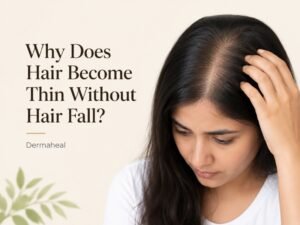
Hair thinning refers to a gradual reduction in the thickness and density of your hair. Unlike sudden hair fall, where you may notice excessive strands on your pillow or in the shower, hair thinning happens slowly as individual hair strands become finer over time.
You may notice:
- Your scalp becoming more visible.
- A wider hair partition.
- Reduced hair volume.
- A thinner ponytail.
- Difficulty styling your hair.
- Hair that feels finer than before.
Since hair thinning develops gradually, many people mistake it for normal ageing until significant changes become noticeable.
Common Causes of Hair Thinning Without Hair Fall
1. Genetics
One of the most common reasons for gradual hair thinning is hereditary hair loss. If your parents or close relatives experienced thinning hair, you may also develop similar changes over time.
Genetic hair thinning usually progresses slowly and often begins around the temples, crown, or hairline.
2. Hormonal Changes
Hormonal imbalance can affect the hair growth cycle.
Common causes include:
- PCOS
- Thyroid disorders
- Pregnancy
- Menopause
- Age-related hormonal changes
Hormonal changes often cause hair strands to become thinner before noticeable hair shedding begins.
3. Nutritional Deficiencies
Hair requires adequate nutrients to remain healthy.
Low levels of certain nutrients may contribute to thinning hair, including:
- Iron
- Vitamin D
- Vitamin B12
- Protein
- Zinc
A balanced diet plays an important role in maintaining healthy hair growth.
4. Chronic Stress
Physical and emotional stress can affect the normal hair growth cycle.
Even when excessive hair fall isn’t obvious, long-term stress may lead to weaker, finer hair over time.
Managing stress, getting enough sleep, and maintaining a healthy lifestyle can support overall hair health.
5. Ageing
As we grow older, hair follicles naturally produce finer and shorter hair strands.
Age-related hair thinning is common in both men and women and may become more noticeable after the age of 35.
6. Frequent Heat and Chemical Treatments
Regular use of:
- Hair straighteners
- Curling irons
- Hair colouring
- Bleaching
- Chemical smoothing
can weaken hair shafts and make hair appear thinner and more fragile.
Protecting your hair from excessive heat and harsh chemicals is essential for maintaining its strength.
7. Scalp Conditions
A healthy scalp is the foundation of healthy hair.
Conditions such as dandruff, scalp inflammation, fungal infections, or excessive oil production may affect the quality of new hair growth if left untreated.
Signs That Hair Thinning Needs Medical Attention
You should consider consulting a dermatologist if you notice:
- Hair becoming thinner over several months.
- Increased scalp visibility.
- A widening hair partition.
- Hairline changes.
- Reduced hair density.
- Hair becoming weaker despite using hair care products.
Early evaluation offers the best opportunity to preserve existing hair and encourage healthier regrowth.
How Dermatologists Diagnose Hair Thinning
At Dermaheal, every patient undergoes a detailed consultation to identify the underlying cause of hair thinning.
The assessment may include:
- Medical history
- Hair and scalp examination
- Hair density evaluation
- Lifestyle assessment
- Nutritional review
- Evaluation of hormonal or medical factors
Understanding the root cause allows for a personalized treatment plan rather than a one-size-fits-all approach.
Treatment Options for Hair Thinning
Treatment depends on the underlying cause, age, hair density, and overall scalp health.
Your dermatologist may recommend one or a combination of the following:
PRP Hair Therapy
Platelet-Rich Plasma (PRP) uses growth factors derived from your own blood to support healthier hair follicles and improve hair density in suitable candidates.
Hair Growth Medications
Prescription medications may help strengthen existing hair and support healthier growth when used under dermatological supervision.
Scalp Treatments
Treating dandruff, inflammation, or scalp infections can create a healthier environment for hair growth.
Hair Transplant
For individuals with advanced hair thinning or permanent follicle loss, a hair transplant may provide a long-term hair restoration solution by redistributing healthy hair follicles to thinning areas.
Lifestyle and Nutritional Guidance
Improving nutrition, reducing stress, maintaining a healthy sleep routine, and following proper hair care practices all contribute to better long-term hair health.
Can Hair Thinning Be Reversed?
In many cases, yes.
If hair follicles are still active, early treatment can often improve hair density and slow further thinning.
The sooner you seek professional advice, the better your chances of preserving existing hair.
Ignoring gradual hair thinning may allow the condition to progress, making treatment more challenging later.
Why Choose Dermaheal Skin & Hair Clinic?
At Dermaheal Skin & Hair Clinic, Dwarka, our dermatologists provide comprehensive evaluation and evidence-based treatments for various hair and scalp conditions.
Why patients choose Dermaheal:
- Experienced dermatologists
- Personalized hair assessments
- Advanced hair restoration solutions
- Modern diagnostic techniques
- Comprehensive scalp evaluation
- Patient-focused treatment plans
- Advanced dermatology and aesthetic care under one roof
Whether you’re experiencing early hair thinning or long-term hair loss, our team works with you to create a treatment plan tailored to your needs.
Book a Hair Consultation Today
If your hair has become thinner even without noticeable hair fall, don’t ignore the early signs.
Timely evaluation by an experienced dermatologist can help identify the underlying cause and guide you toward the most suitable treatment for healthier, fuller-looking hair.
👉 Book your consultation today: https://www.dermaheal.co.in/
📖 Explore more dermatologist-approved skin and hair care articles: https://www.dermaheal.co.in/blog/
Frequently Asked Questions
Why is my hair becoming thinner without hair fall?
Hair thinning can result from genetics, hormonal changes, ageing, nutritional deficiencies, stress, or scalp conditions. A dermatologist can determine the exact cause after a detailed evaluation.
Can hair thinning happen without losing hair?
Yes. Hair strands may gradually become finer while the total number of hairs remains relatively unchanged, making your hair appear less dense.
Is hair thinning permanent?
Not always. Many causes of hair thinning can be managed effectively when diagnosed early. The outcome depends on the underlying cause and how soon treatment begins.
Which treatment is best for hair thinning?
Treatment varies depending on the cause. Your dermatologist may recommend PRP therapy, medications, scalp treatments, lifestyle changes, or hair transplant surgery in appropriate cases.
When should I consult a dermatologist?
You should seek professional advice if your hair continues to become thinner, your scalp becomes more visible, or your hair density decreases despite maintaining a healthy hair care routine.